Why ISP-Provided Routers Might Be Your Best Bet for Internet Performance
If you’re using a modem or Wi-Fi router from your internet service provider (ISP), you might be enjoying better internet performance than those who opt for their own devices. this insight comes from Opensignal, an autonomous analytics firm that recently published a report examining the effectiveness of ISP-provided gateway devices.
ISP Gateways Outperform Third-Party Hardware
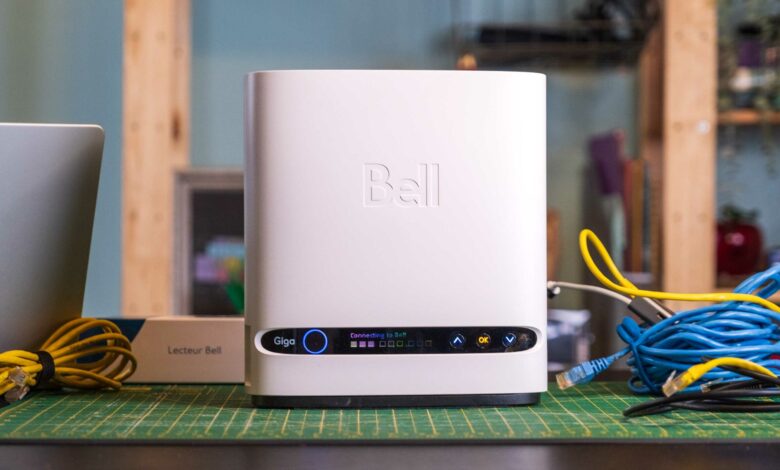
The report reveals that home Wi-Fi gateways supplied by ISPs generally deliver higher ‘Broadband Consistent Quality’ compared to third-party routers, with an average enhancement of at least 12 percent.Among the major players, Bell’s Wi-Fi gateways showed the most meaningful advantage over non-ISP equipment.
The Broadband Consistent Quality metric evaluates how well a network meets the demands of common tasks on a single device. it takes into account various performance indicators such as download and upload speeds, latency, and jitter. For those curious about how these metrics are calculated, more details can be found on Opensignal’s website here.
Performance Insights from Recent Data
Data collected by Opensignal between October 1 and December 29 in 2025 indicates that Bell's provided equipment achieved approximately 17.5 percent better consistent quality than third-party options. Telus followed closely with a 13.5 percent improvement while Rogers came in at around 12.7 percent.
The Rise of Wi-Fi 7 Technology
All three major ISPs have recently rolled out upgraded Wi-fi gateways featuring the latest Wi-Fi 7 technology—Rogers led this charge in June 2025,followed by Telus in July and Bell in September. While newer standards like Wi-Fi 6 or Wi-Fi 7 can enhance performance slightly, they are just one part of what makes a good connection.
An engaging observation is that even though Rogers had more customers utilizing these advanced technologies compared to Bell or Telus, its overall consistent quality increase was still lower than expected. One reason for this could be related to connection types; as a notable example, Bell's gateway made greater use of faster and less crowded 5GHz connections rather than relying heavily on slower ones like the conventional 2.4GHz band.
A Changing Landscape: The Role of Gateway Hardware
The Canadian internet market is evolving rapidly due to new regulations allowing ISPs to resell services using other providers' networks through wholesale programs set up by the Canadian Radio-television and Telecommunications Commission (CRTC). This shift means that hardware like modems and routers will play an increasingly important role in determining home network performance.
A case study involving Bell and Telus illustrates this change well: Telus has expanded its fiber offerings into Ontario using infrastructure owned by Bell—much to their competitor's dismay! since both companies utilize the same fiber lines into homes across Ontario, customers experience similar internet speeds irrespective of which provider they choose; thus making their choice largely dependent on which ISP offers superior gateway hardware.
A Personal Experience with router Performance
I found Opensignal’s findings particularly relevant given my own experiences with various routers over time. There was once when I preferred my Asus router over any provided by my ISPs because it consistently delivered faster speeds when I lived in Whitby, Ontario.
Though, after relocating to Hamilton several years ago, I've discovered that my ISP-supplied equipment has been quite effective for my needs as well! Initially using Bell’s original Giga Hub and later switching to Cogeco ,I’ve noticed no significant drop-off in speed despite changing providers—especially since Cogeco offered me comparable speeds at lower rates after frequent price hikes from Bell!
Tackling Band Steering Issues
My only complaint about Cogeco's router is its inability to disable band steering—a feature designed to automatically connect devices based on which frequency offers better performance (either via the faster but shorter-range signal at five gigahertz or longer-range but slower two-point-four gigahertz). Unluckily for some smart home gadgets requiring two-point-four gigahertz connectivity—like smart lights or Sonos speakers—I frequently enough face connectivity issues due solely as band steering doesn’t always cooperate smoothly!
Your Next Steps Towards Better Internet Performance
If you're experiencing slowdowns with your home internet setup right now? Consider starting off by checking your modem/router situation first! If you're currently relying on third-party gear rather of what your ISP provides? It might potentially be worth trying out theirs instead! And if you find their hardware isn’t performing up-to-par either? Don’t hesitate asking them if there are newer models available—you might just discover something much more effective!
And don't forget! NoveByte might earn a little pocket change when you click on our links helping us keep this delightful journalism rollercoaster free for all! These links don’t sway our editorial judgment so you can trust us If you’re feeling generous support us here!